Insurance / Financial Services
2.5 stars to 4.7 in a regulated industry
Travelers · Senior Director, Experience Design · 2020–2022
The starting state
Nobody asks the lawyers to brainstorm.
In regulated industries, the relationship between legal/compliance and product design follows a predictable script. Legal hands down requirements. Design does its best within those constraints. Everyone accepts this as the cost of doing business in insurance.
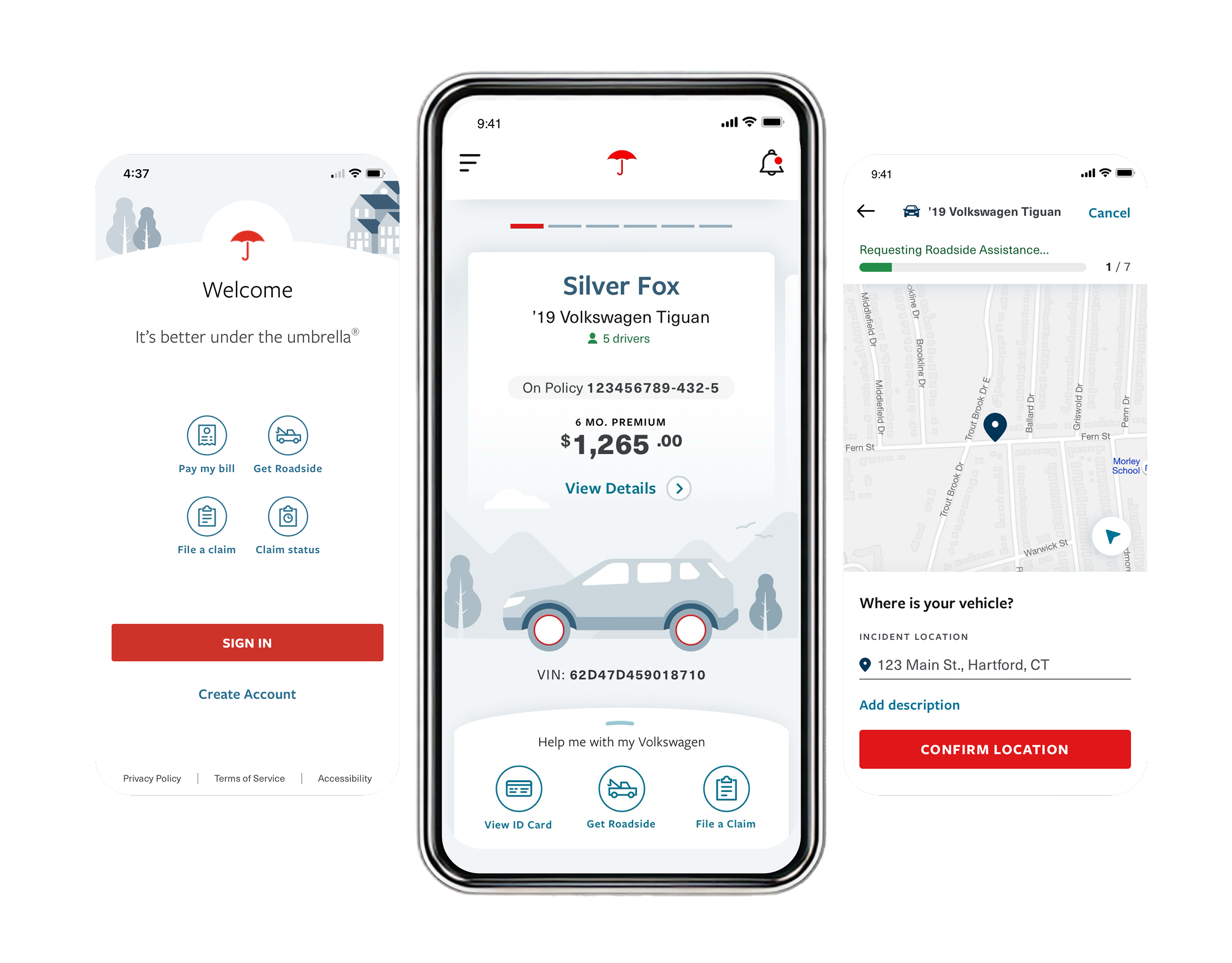
The Travelers insurance app was a product of that script. Three business units, each with their own legal requirements, each building their section of a shared app independently. The result: a 2.5-star app organized around the company's internal structure rather than anything resembling how customers think about their insurance.
I was brought in as Senior Director of Experience Design, leading a 12-person team across design, content, and research.
The research
I commissioned a multi-method research effort that made the problem undeniable. Users think in two ways: thing-first (my car, then what do I need to do with it) or action-first (I need to file a claim, then which car). The app supported neither. It supported a third mental model: Travelers' org chart.
The organizational move
Fixing the architecture meant unifying three business units into one product team. I pulled a crack team of designers from each business unit and used research and prototype testing to build the case for unification. But the organizational alignment was only half the problem.
The compliance challenge
The other half was compliance. The app's information architecture couldn't be restructured without restructuring how legal requirements were implemented. Coverage information displayed in a policy-centric hierarchy needed to become item-centric. The traditional approach would never get there. Legal would hand down the same requirements, and design would arrange them in the same familiar structure.
So I changed the conversation. I brought legal into the design process to ideate, not just review. Starting from the customer's mental model, the question became: how do we present this information in a way that makes sense to the customer and satisfies compliance? The starting point shifted from "here are our requirements, make it work" to "here's how customers think, help us find a compliant path."
Legal found one. Policy-level coverages with limits across items and individual items were successfully restructured into an item-centric architecture that passed compliance review. The monolithic codebase was refactored to support it. The app was rebuilt.
The outcome
2.5 stars became 4.7. The work earned the Chairman's Award for Excellence, Travelers' highest individual honor.