Edtech
From zero to award-winning product in under a year
Learning Ally · Head of Design, UX Research & Accessibility · 2022–2023
The assumption
Learning Ally is an edtech company. When the organization needed a digital professional learning product for pre-K through fifth grade educators, the natural assumption was to build it. The platform, the technology, the infrastructure. That's what edtech companies do.
As Head of Design, UX Research, and Accessibility, I led a five-member team responsible for the experience design across Learning Ally's full product portfolio.
The strategic decision
The engineering team was small and the tech stack was monolithic. A custom LMS was technically possible but it would have consumed the timeline and the team. More importantly, it would have put the focus in the wrong place. The platform wasn't the product. The content was the product. The multimodal curriculum, the accessibility-first design, the programming that would actually change how educators teach literacy. That was where the differentiation lived.
I drove the strategy not to build the delivery platform. In procurement I pushed for two things: a white-label front end so we could ship branded fast, and a headless architecture so we could own the front end later. Speed now. Control later.
Single sign-on integration was a requirement from the start. Educators already manage too many logins. The platform connected to Clever, ClassLink, Google Classroom, and existing Learning Ally accounts so entry stayed frictionless for educators and administrators.
The content
With the platform decision made, the team focused on what mattered.
Learning Ally was founded to serve blind and dyslexic readers. Accessibility is the organization's reason for existing, not a compliance checkbox. A multimodal content approach followed directly: articles, videos, audio, quizzes, presentations, interactive elements, infographics. Different people learn in different ways. The content needed to meet them there.
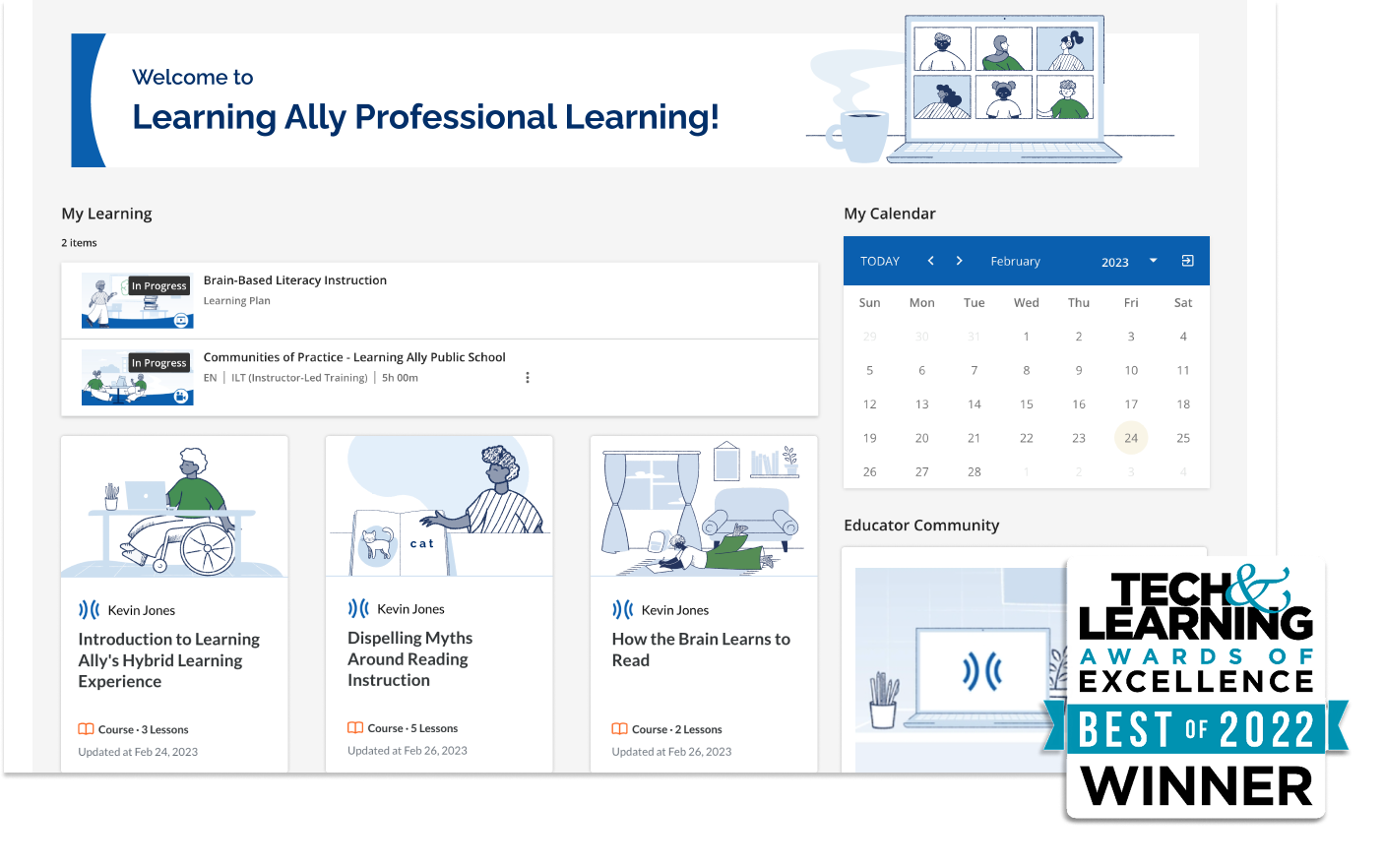
The illustration system
Producing that range of content at scale was its own design problem. Hiring illustrators for every asset wasn't sustainable. I created a component-based illustration system: characters, scenes, objects, and parts that could be assembled into thousands of unique illustrations, infographics, animations, and thumbnails. Consistent visual language, lower cost, faster production.
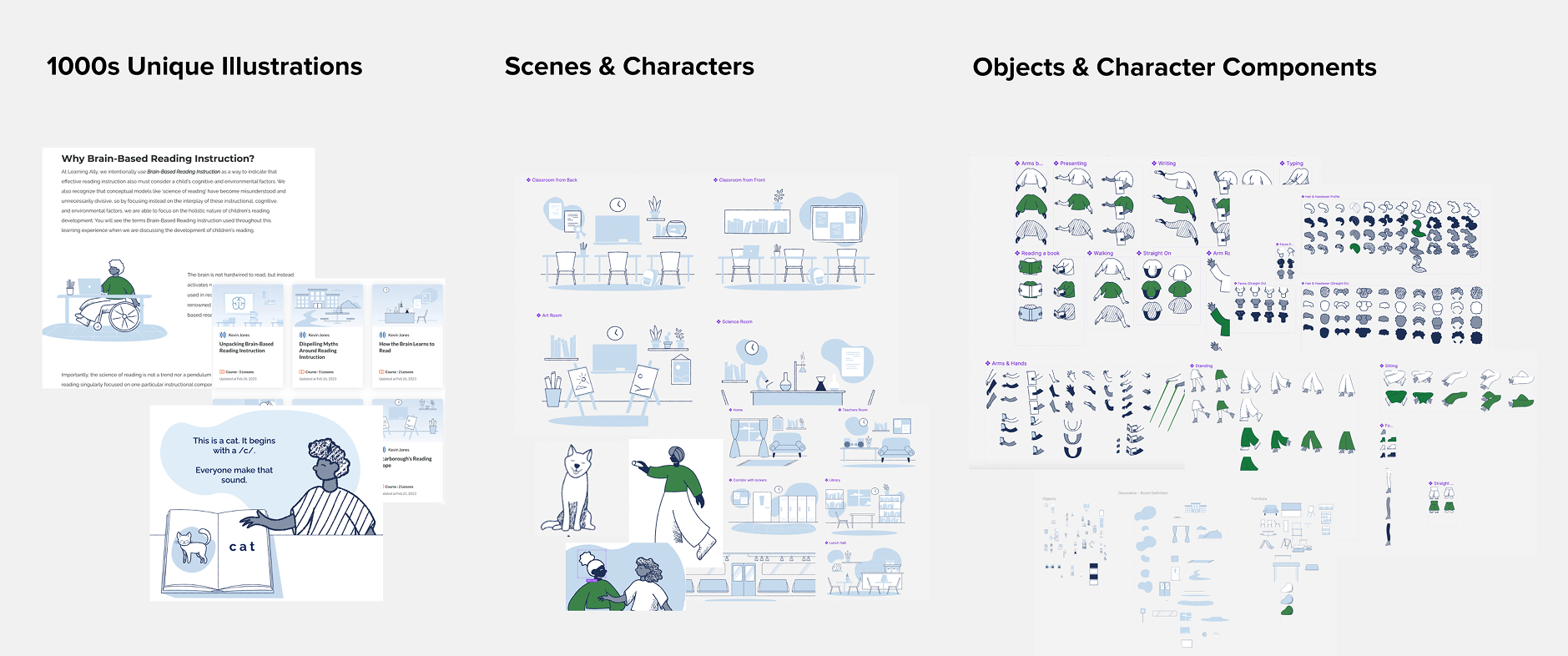
The approach came from design systems thinking applied to content. The same logic now sits underneath modern AI image tools, but in 2022 it was a manual library and a lot of file naming.
Content costs dropped 50%. Time-to-market accelerated 30%. Research activities across the organization increased tenfold.
The product principles
Four product principles guided the work, all derived from research: Fluid (modalities aligned to how people actually learn), Relevant (lean and actionable), Novel (not stale PD), and Low Load (low cognitive overhead, classroom-ready).
The outcome
The product won the Tech & Learning Best of 2022 Award. Back-to-school professional development scored an NPS of 75. Ongoing active engagement held at 65%.